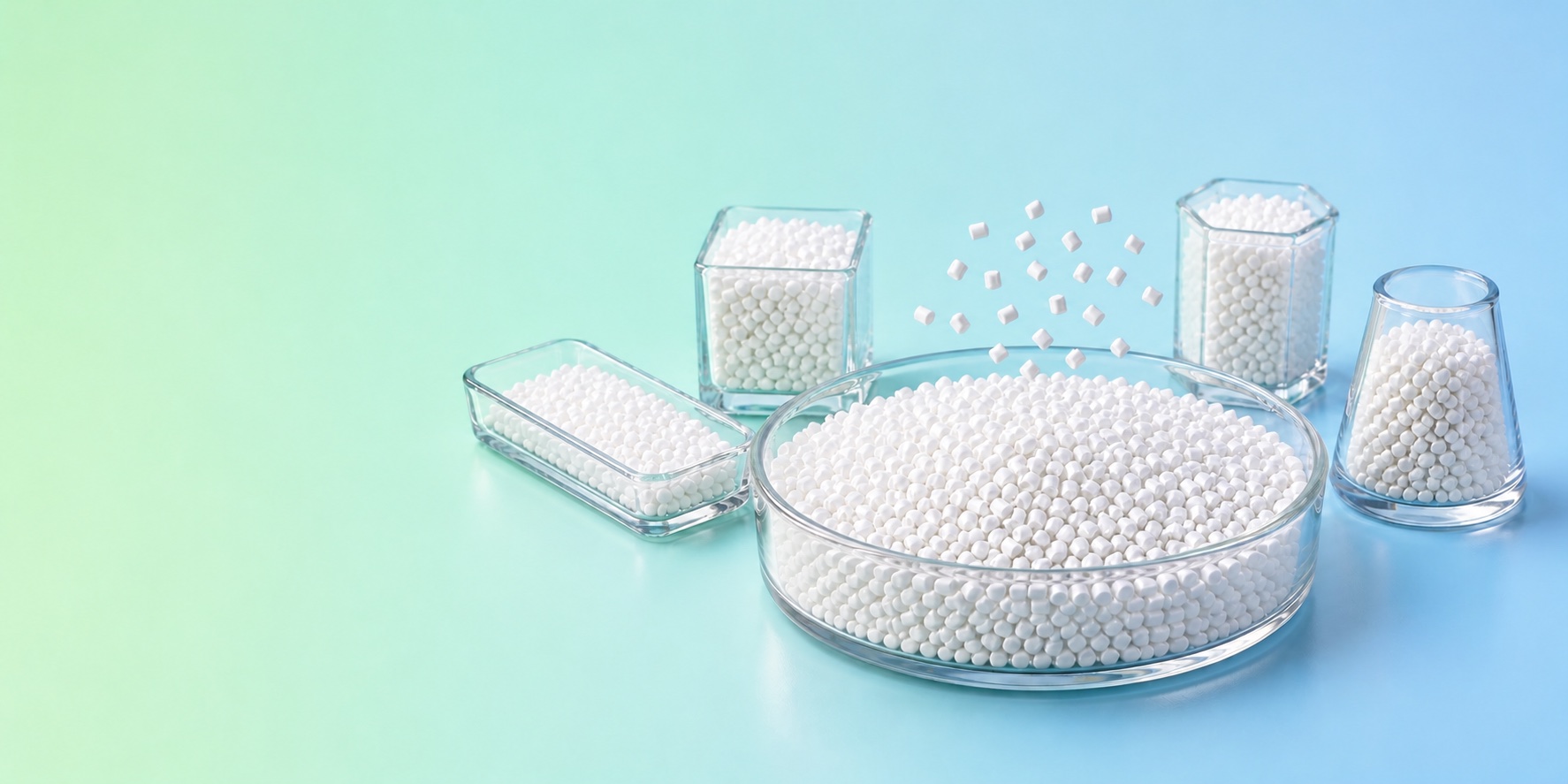
White Appearance Is a Balance
White masterbatch is selected by balancing opacity, brightness, undertone, dispersion, surface appearance and processing behavior. Film gauge, wall thickness, natural resin color and texture can change how the same formulation appears in the finished product.
Opacity and Undertone
A clean visual white may require different formulation priorities from a high-coverage white. Blue, neutral or warm undertones can be reviewed against a physical reference. The desired appearance should be assessed in a sample that represents the final thickness and manufacturing process.
Processing Considerations
Carrier compatibility and pigment distribution influence feeding, surface quality and visual uniformity. For thin film, small changes in gauge can affect opacity. In molding, flow path, weld areas and texture may influence the observed shade.
What to Provide
Send the resin, processing method, thickness, target sample, required opacity or brightness, surface finish, end-use environment and relevant customer test criteria.
Đặc điểm sản phẩm
- White tone developed against a physical reference
- Opacity and brightness reviewed at finished-product thickness
- Carrier route aligned with the production polymer
- Dispersion and surface uniformity included in sample approval
Customization and Grade Chọnion
White shade, undertone, opacity and carrier system can be developed around the resin, product gauge, processing temperature and approved visual standard.
Frequently Asked Questions
Why does white film look different when thickness changes?
Opacity and the influence of the base resin change with film gauge, so evaluation should use the intended production thickness.
Can you match a cool or warm white?
Yes. Provide a physical reference and define the resin, thickness, texture and lighting conditions used for approval.
Is maximum whiteness always the correct target?
No. Opacity, brightness, undertone, processing and cost need to be balanced for the actual product.